Arthur Rackham and the golden age of illustration
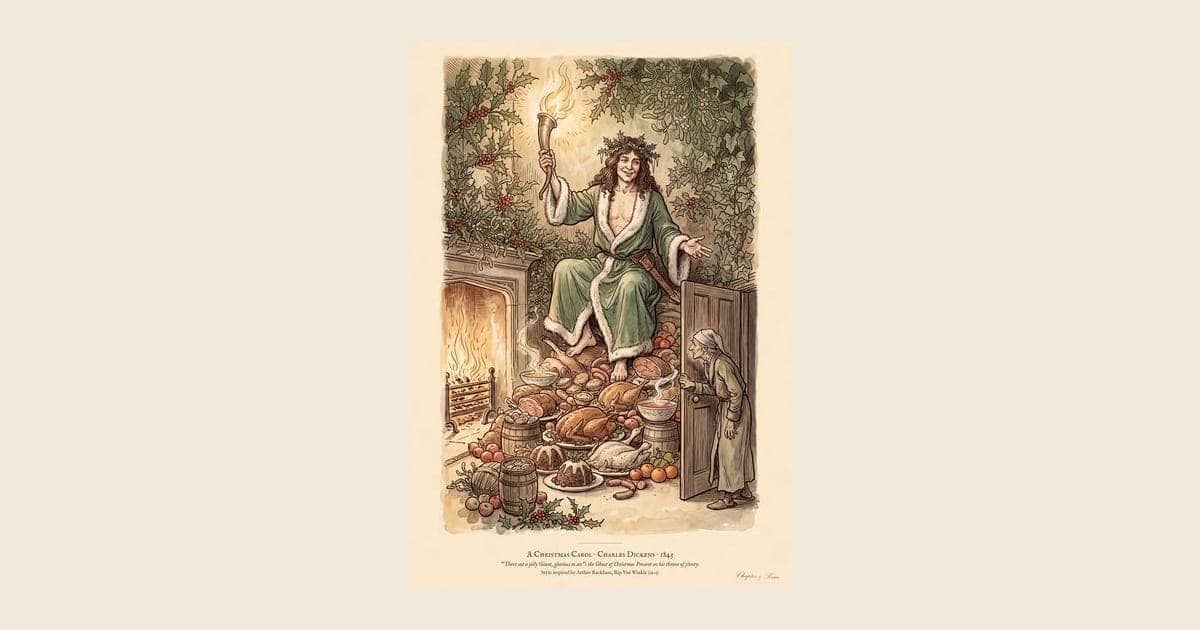
Twisted trees with faces, a wiry pen line and colour so thin you can see the paper through it. Arthur Rackham's style is instantly recognisable, and it is the look behind my print of the Ghost of Christmas Present.
Who was Arthur Rackham?
Rackham was born in London in 1867. He worked as an insurance clerk while taking evening classes at the Lambeth School of Art, then drew for magazines for years before he found his style. He died in 1939, having illustrated many of the best-loved books in English.
The gift book
In the early 1900s, new colour printing made it possible to reproduce an artist's watercolour faithfully, and publishers began producing lavish illustrated editions for Christmas, known as gift books. Rackham became the star of the form. His Rip Van Winkle, in 1905, made his name. It was followed by Peter Pan in Kensington Gardens in 1906, Alice's Adventures in Wonderland in 1907, A Midsummer Night's Dream in 1908, Wagner's Ring and, in 1915, A Christmas Carol.
How he worked
Rackham drew first in pencil, then in ink with a fine, nervous line, then laid thin washes of watercolour over the top, often building the colour up and wiping it back. The palette is muted: browns, greens, soft greys, with one colour allowed to sing. His trees have knuckles and his old men have roots for feet.
My Ghost of Christmas Present
I wanted Dickens's jolly giant to look like a plate from an old gift edition you might find under the tree, so I borrowed Rackham's pen line and muted washes from his Rip Van Winkle. It is not copied from his own Christmas Carol plates, or from John Leech's originals of 1843. The ghost is in green, as Dickens wrote him, on a throne of turkeys and puddings, with Scrooge peeping round the door.
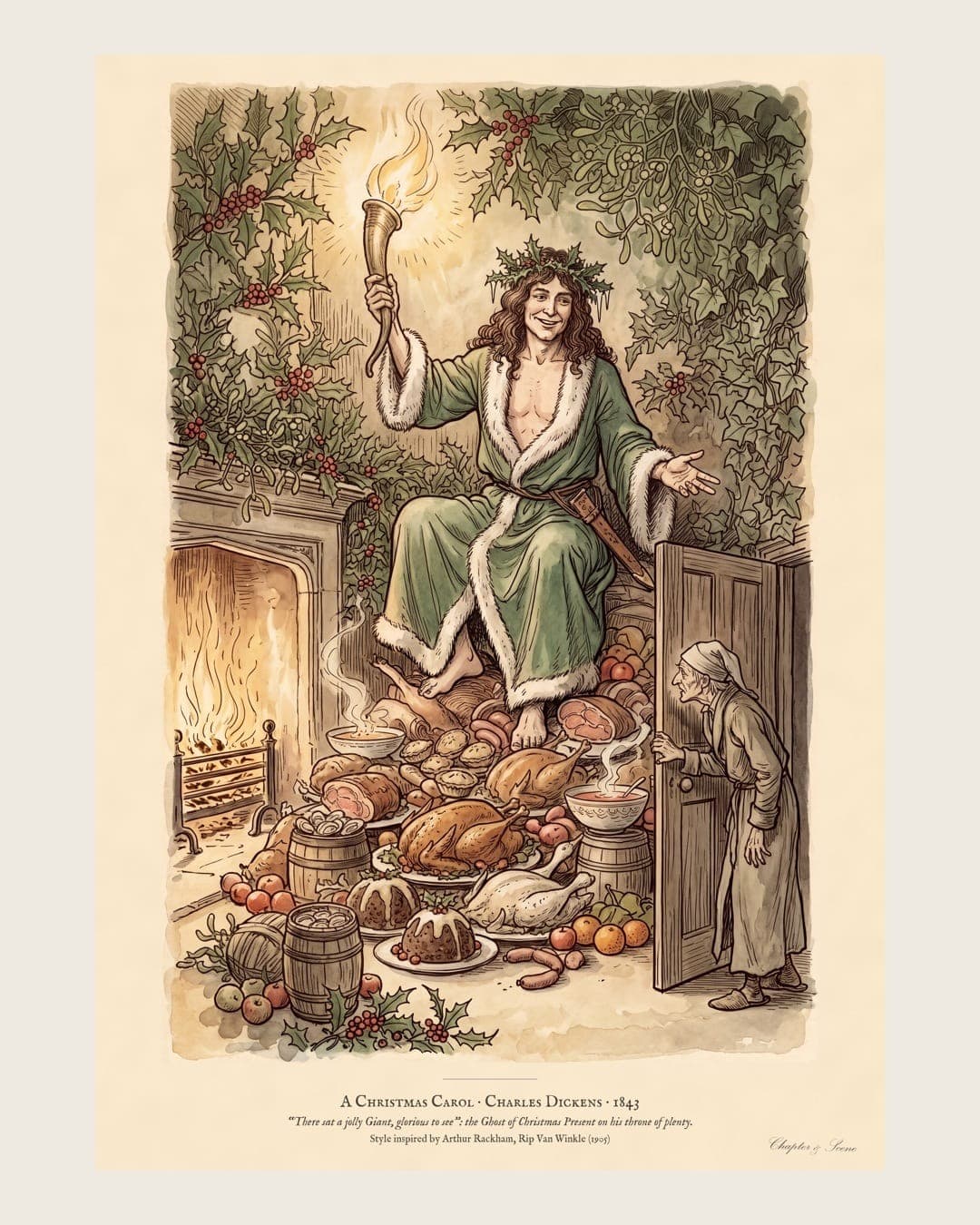
It is a digital artwork I made with AI image tools in the style of an Edwardian ink and watercolour illustration, art-directed by me, not a hand-painted watercolour. More in vintage illustration prints and A Christmas Carol art prints.