Gustave Doré, the engraver who illustrated the dark
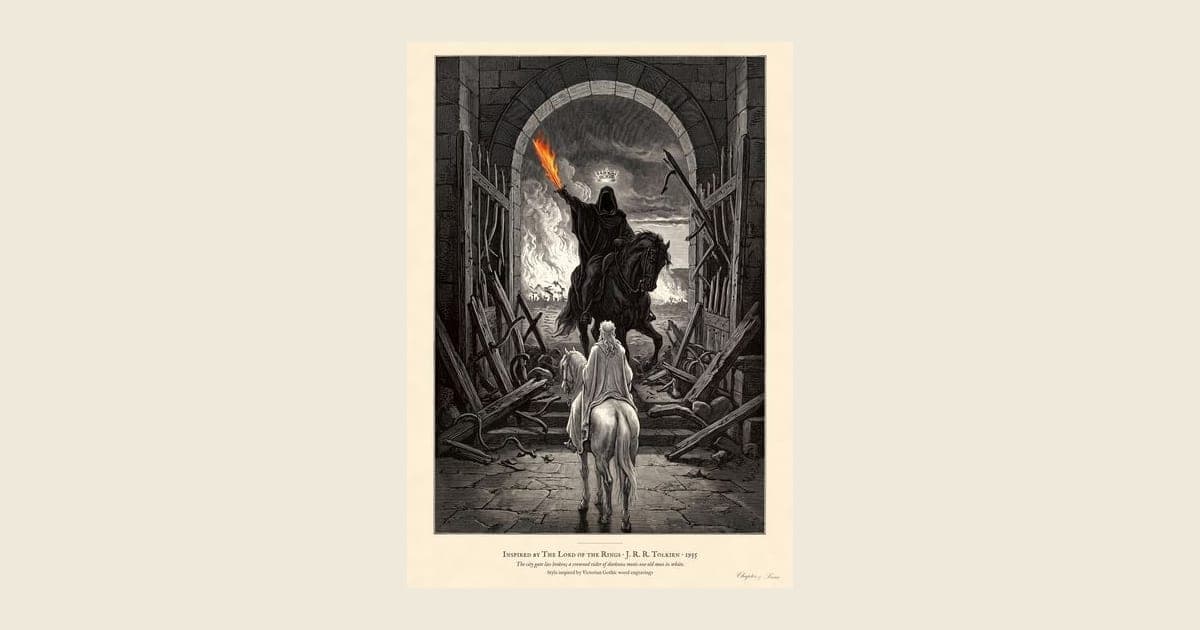
If you have ever pictured Dante's Hell, a giant albatross over a frozen sea, or a rider bursting out of the darkness, there is a good chance you were picturing Gustave Doré. My print of the Witch-king at the Gate of Minas Tirith borrows his line.
Who was Gustave Doré?
Doré was born in Strasbourg in 1832 and was a professional illustrator in Paris while still a teenager. By the time he died, in 1883, he had illustrated many of the great books in Western literature and was one of the most famous artists in Europe.
The books
His illustrations for Dante's Inferno, published in 1861, made his name. Don Quixote followed in 1863 and an illustrated Bible in 1866, and then Paradise Lost, The Rime of the Ancient Mariner, and in 1884, after his death, Poe's The Raven. In 1872 he published London: A Pilgrimage, with the writer Blanchard Jerrold, a dark and crowded portrait of the Victorian city. London loved him so much that a gallery devoted to his paintings ran for years on New Bond Street.
How the engravings were made
Doré drew. Others cut. He made his drawings directly on blocks of boxwood, and skilled engravers cut away the wood with fine tools to turn his washes and lines into thousands of tiny engraved strokes. That is why his pictures have such a rich range of grey: every tone is built from lines. Look closely at any Doré plate and you will see the sky made of parallel cuts.
Why he still matters
Doré understood darkness better than anyone. He used huge skies, tiny figures, deep shadow and one burst of light. Fantasy artists and filmmakers have been borrowing from him ever since, and you can feel him behind a great many images of Middle-earth.
Death on the Pale Horse, and the Witch-king
For my Lord of the Rings print, I started from Doré's engraving Death on the Pale Horse, from his Bible illustrations. I borrowed his engraved line and the way his rider surges out of the dark, and left out his skeleton, scythe and demons. The scene is the broken Gate of Minas Tirith before dawn, and the only colour on the sheet is the flame on the raised sword.
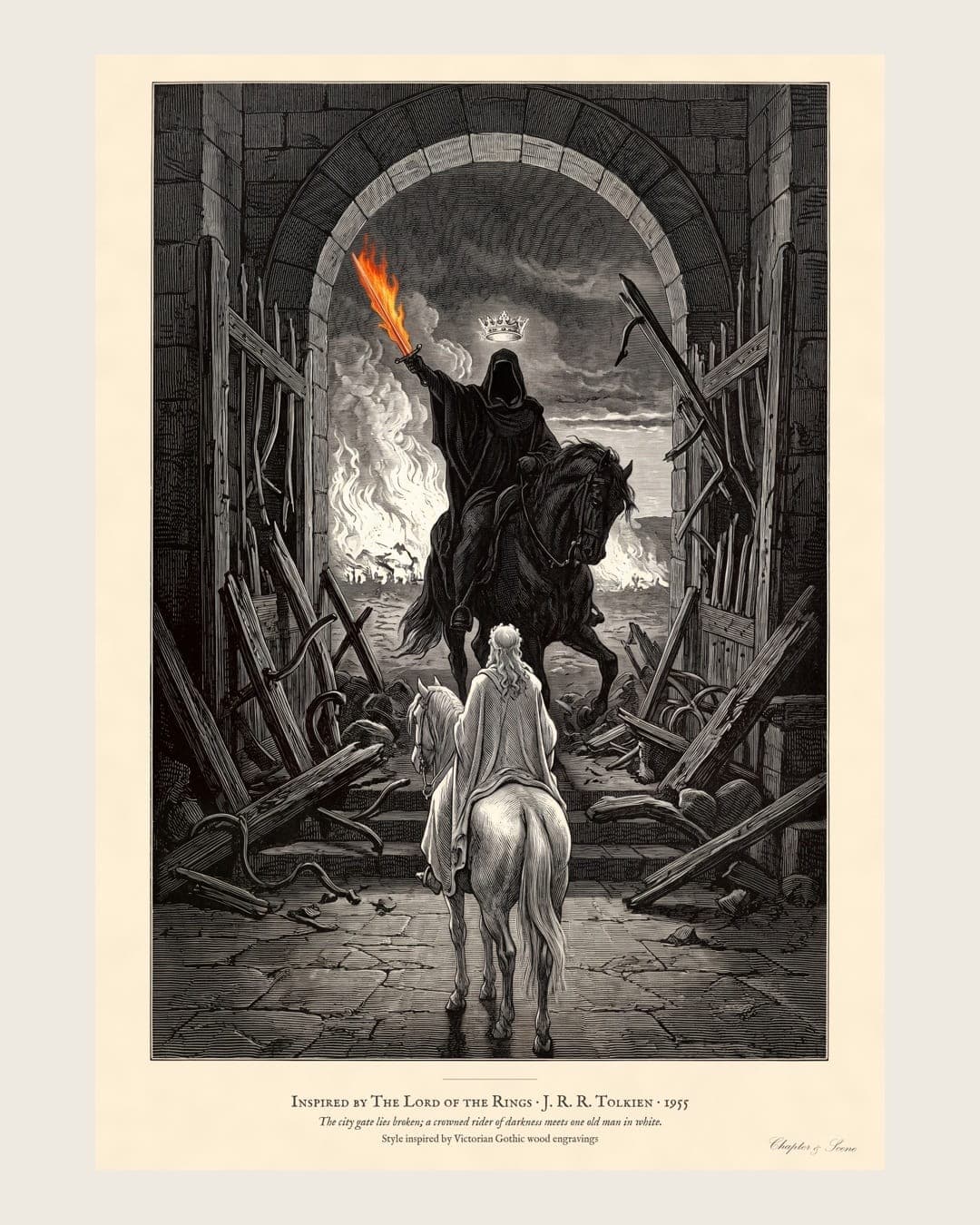
It is a digital artwork I made with AI image tools in the style of a Victorian wood engraving, art-directed by me, not a hand-cut engraving. More in engraving and etching style prints and printmaking styles explained.