Printmaking styles explained
Every print in my shop is made in the style of a historic way of printing. Here is a plain guide to what those styles are, how each one was made, and how to tell them apart on a gallery wall.
The three families
Almost all traditional printmaking falls into three families. In relief printing, you cut away everything that should stay white and ink the surface that is left. In intaglio, you cut or bite lines into a metal plate, ink them, and wipe the surface clean, so the ink comes out of the grooves. In planographic printing, the image sits on a flat surface and is held there by chemistry.
Woodcut and linocut (relief)
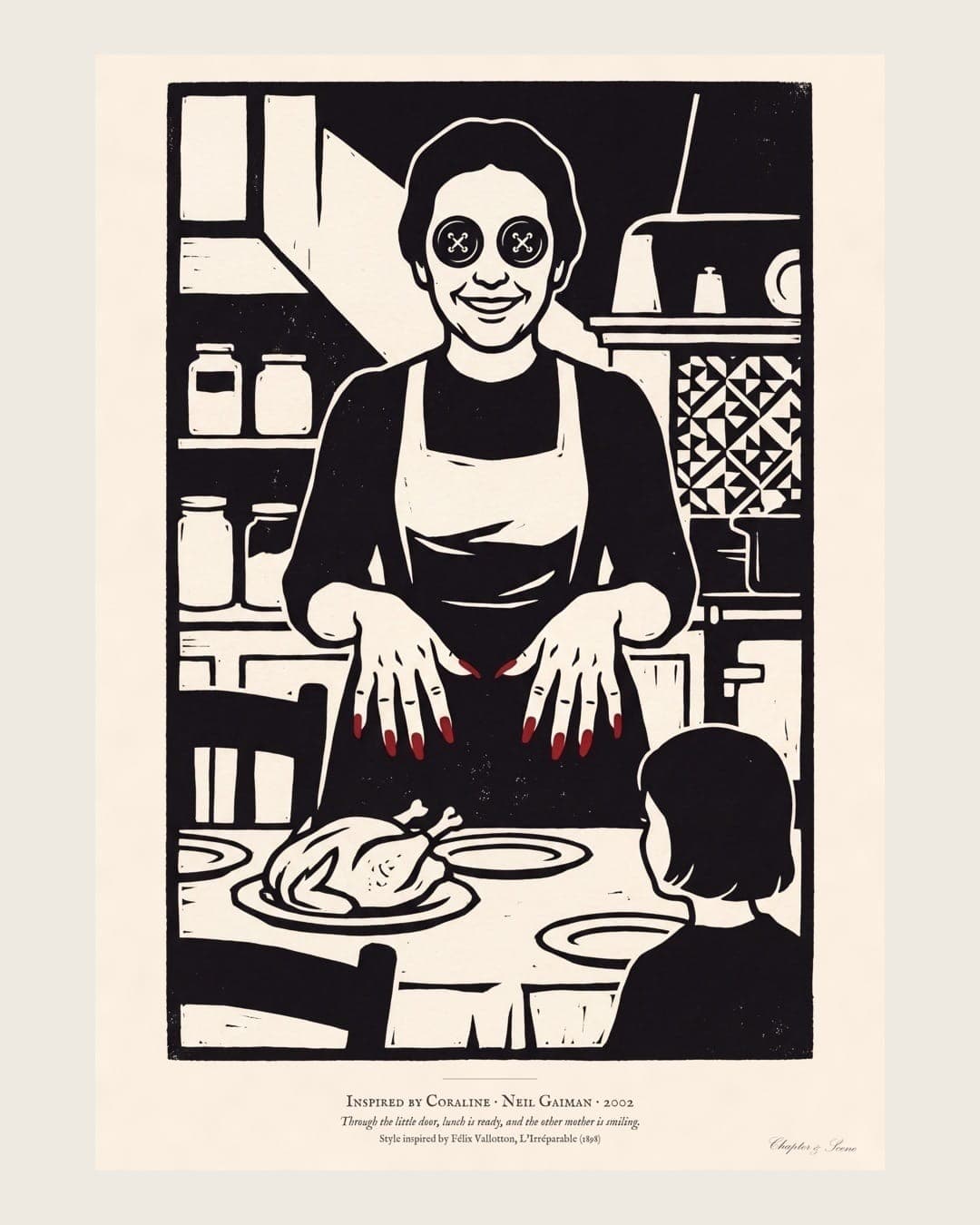
A woodcut is cut along the grain of a plank with knives and gouges. The wood resists fine detail, so woodcuts are bold: big blacks, hard edges and flat shapes. Linocut works the same way on linoleum, which is softer and has no grain. Look for chunky lines and solid areas of black. My Coraline print is in the style of Félix Vallotton's 1890s black woodcuts.
Wood engraving (relief)
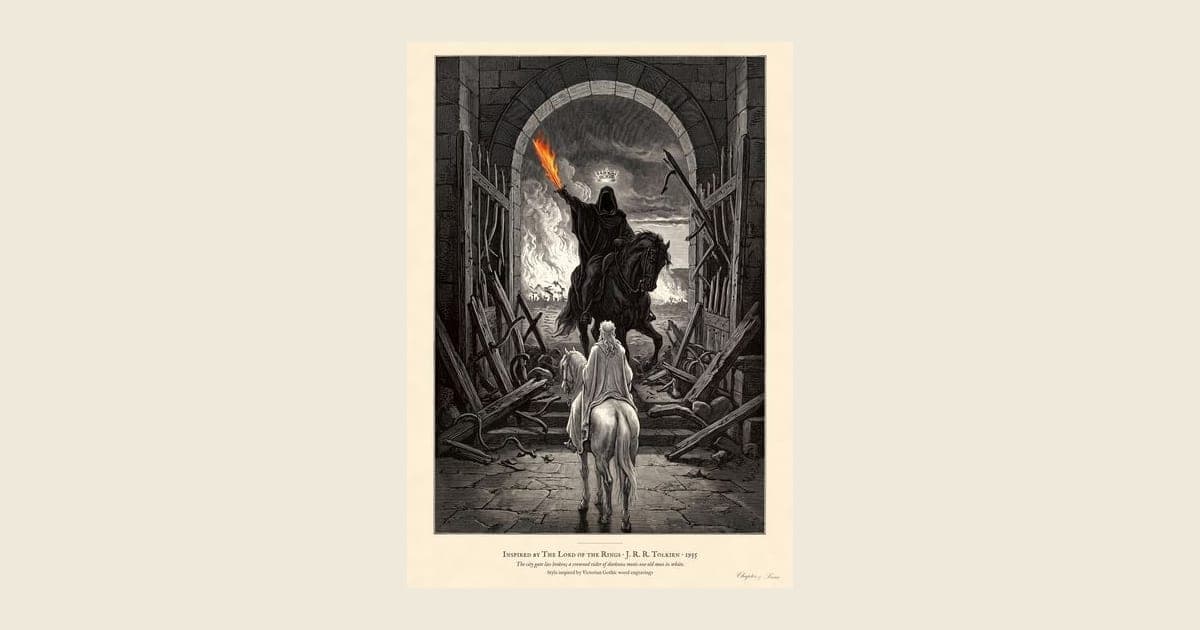
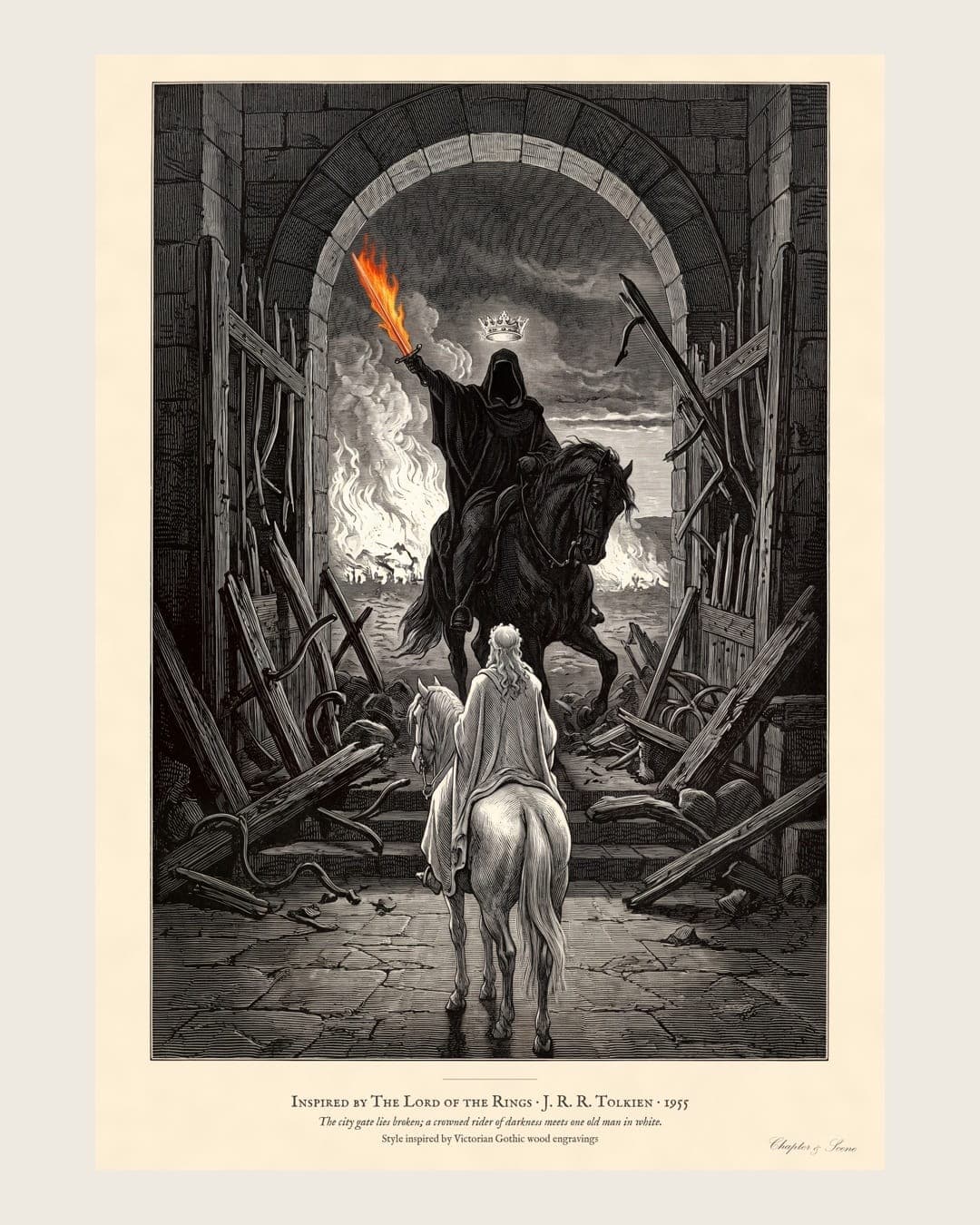
A wood engraving is cut into the end grain of a very hard wood, usually boxwood, with a fine tool called a burin. Because end grain has no direction, the engraver can cut lines as fine as a hair in any direction. From the late eighteenth century to the end of the Victorian age it was how books and newspapers were illustrated. Look for lots of tiny white lines on black. Gustave Doré's great book illustrations were wood engravings cut from his drawings.
Engraving and etching (intaglio)
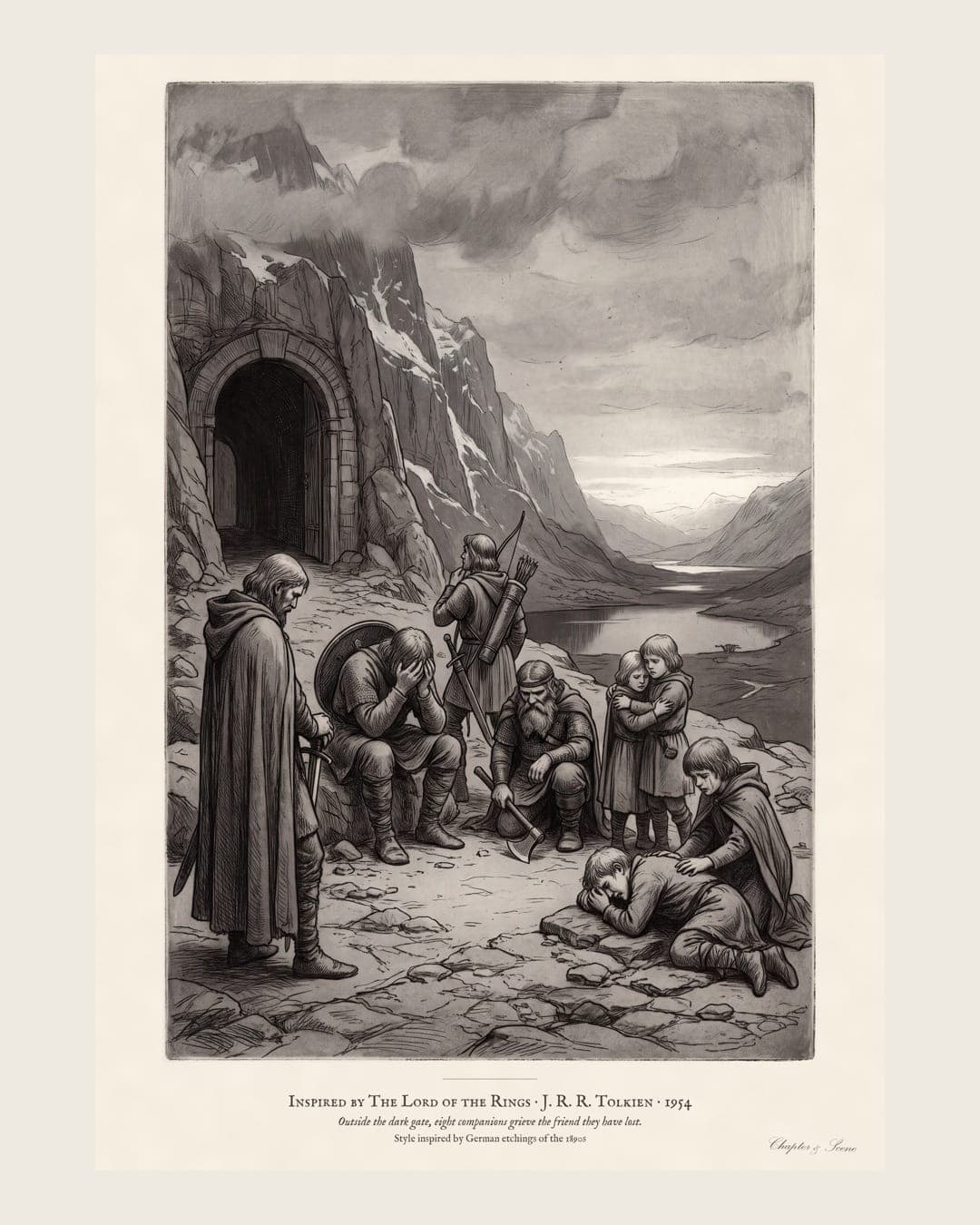
In a metal engraving, the burin is pushed straight into a copper plate, leaving clean, swelling lines. In an etching, the artist draws with a needle through a thin waxy layer on the plate, and acid bites the lines wherever the metal is exposed. Etched lines are freer and more like drawing. Engraved lines are crisper and more formal. That is the quickest way to tell etching from engraving.
Aquatint (intaglio)
Aquatint gives tone rather than line. A fine dust of resin is melted onto the plate, and acid bites around each grain, so the plate prints as a soft grey wash. Combine it with etching and you get line and shadow together, as in my print of the Fellowship after Moria.
Mezzotint (intaglio)
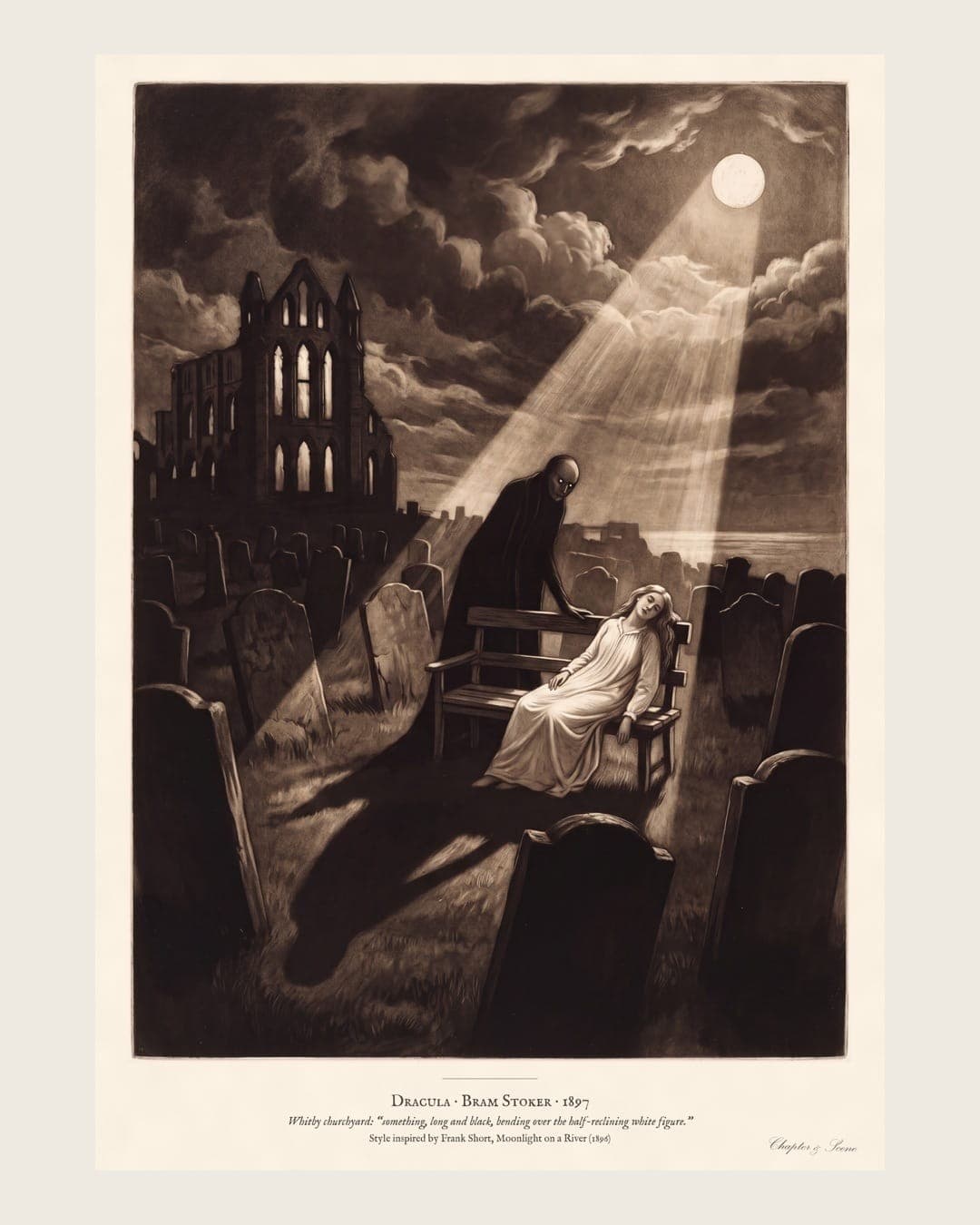
A mezzotint works from dark to light. The plate is roughened all over with a rocking tool until it would print solid velvet black, then the artist scrapes and burnishes it smooth wherever light should fall. It was invented in the seventeenth century and was loved for portraits and moonlit scenes, because no other print gives such a soft, glowing darkness. That is why my Dracula print is in the style of a Victorian mezzotint.
Lithography (planographic)
Lithography was invented in the 1790s. The artist draws on stone with a greasy crayon, the stone is wetted, and the oily ink sticks only to the drawing. It made colour posters possible, and the French posters of the 1890s are its high point.
Japanese woodblock (relief)
A Japanese colour woodblock uses a separate carved block for each colour and water-based inks printed by hand, with graded skies wiped onto the block. I wrote about it on its own: Japanese woodblock prints explained.
A note on my prints
My prints are not hand-pulled. Each is a digital artwork I make with AI image tools in the style of one of these techniques, art-directed and refined until it feels right, then printed on archival matte paper. Every print page names the style and the real artwork that inspired it. Browse them by technique in Shop by style.