Japanese woodblock prints explained
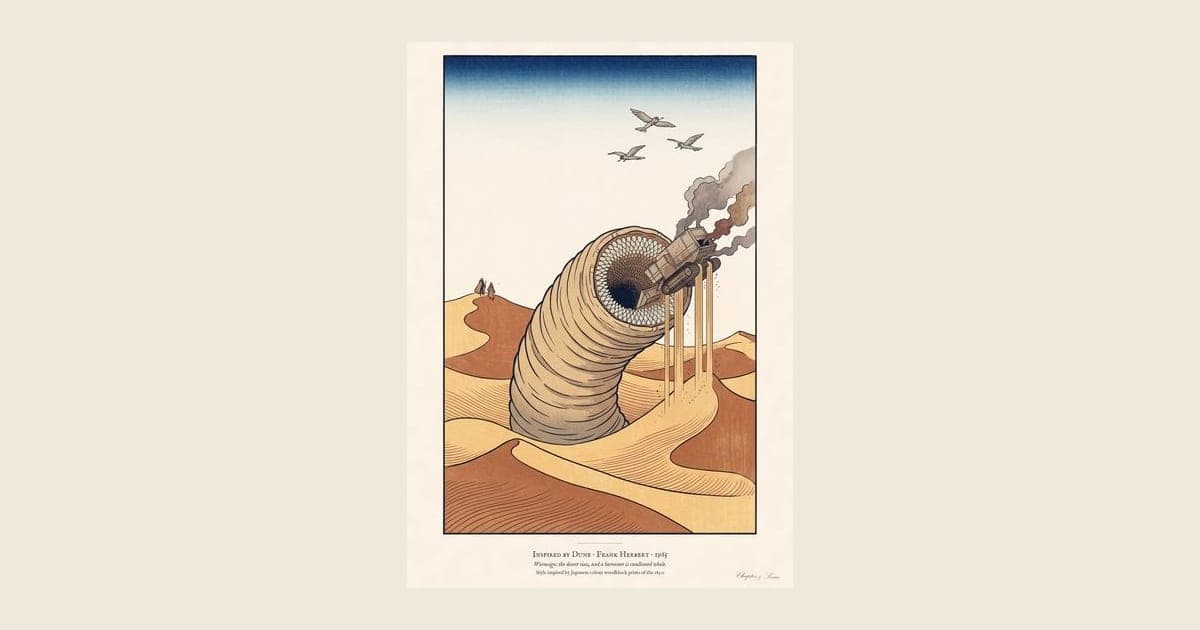
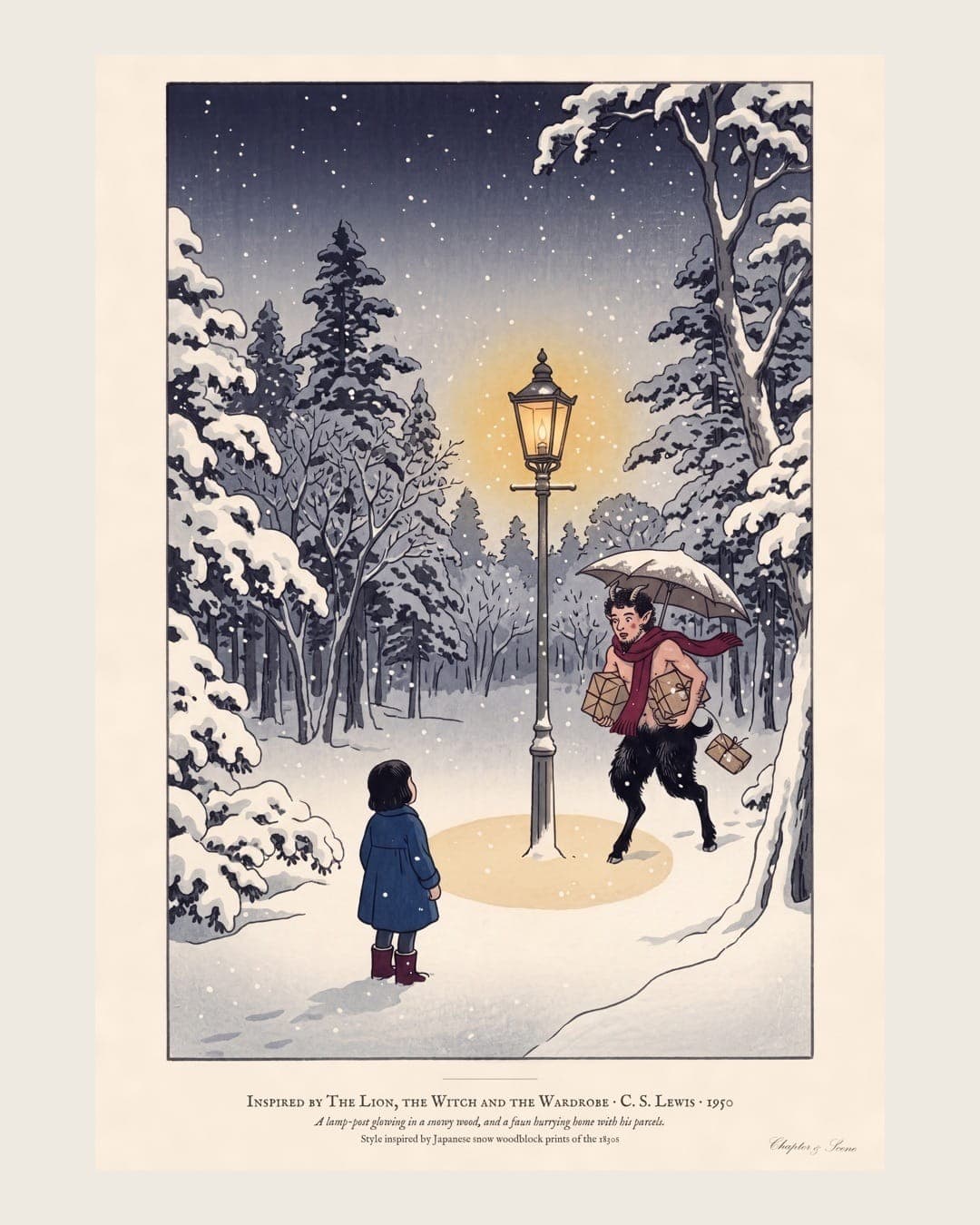
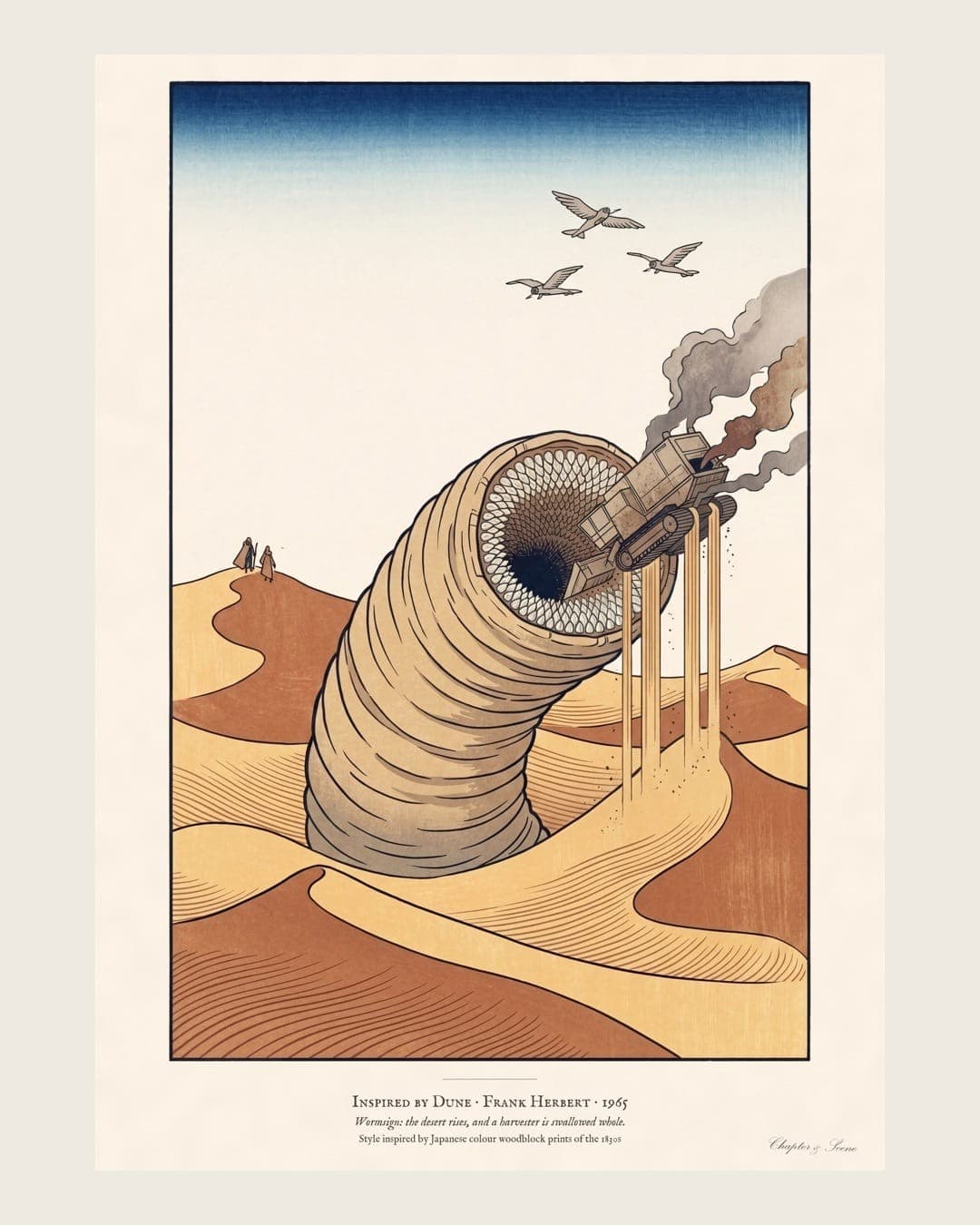
Two of my favourite prints, a Dune sandworm and Narnia's lamp-post in the snow, are made in the style of Japanese colour woodblocks of the 1830s. Here is what that style is and why it still looks so fresh.
What is ukiyo-e?
Ukiyo-e means "pictures of the floating world". It was the popular art of Edo-period Japan, sold cheaply in the city of Edo, now Tokyo: actors, beauties, legends and, later, landscapes. Most of it was printed from woodblocks, so a good design could be printed many times.
How a woodblock print was made
It took a team. The artist drew the design on thin paper. A carver pasted it face down on a block of cherry wood and cut through it, leaving the outlines standing. More blocks were cut, one for each colour. Then the printer brushed water-based ink onto each block in turn and pressed the paper onto it by hand with a flat pad called a baren. Small notches cut into the blocks kept every colour in place. For a sky that fades from deep blue to nothing, the printer wiped the ink across the block by hand. That technique is called bokashi.
Why the 1830s?
Around 1830, a new imported pigment, Prussian blue, became cheap enough to use freely, and it changed everything. Its strong, stable blue was perfect for sky and water. In the same years Katsushika Hokusai published Thirty-six Views of Mount Fuji, including The Great Wave, and Utagawa Hiroshige made The Fifty-three Stations of the Tōkaidō. Landscape became the subject, and snow, rain and mist became the drama.
Snow, and the lamp-post
Nobody drew snow like the Japanese printmakers. They left the paper bare for the snow and printed everything around it, so the white glows. That is the look I wanted for Narnia: a cold blue wood, falling flakes, and the lamp as the only warm light in it.
Scale, and the sandworm
Japanese landscape prints are brilliant at scale: a tiny traveller under a vast mountain or a huge wave. For Dune's sandworm rising out of the desert, I wanted that same calm, careful style to hold something enormous. Look for the two tiny cloaked figures on the far dune.
Bringing the style home
Japanese woodblock prints work in almost any room because they are calm, flat and clear. They suit Japandi and minimal rooms, white or natural oak frames, and plenty of empty wall around them. Hang one where you will see it in daylight, which suits their soft colour best.
A note on my prints
These are not antique or hand-carved woodblocks. They are digital artworks I make with AI image tools in the style of 1830s Japanese colour woodblocks, art-directed by me and printed on archival matte paper. See them together in Japanese woodblock style prints.