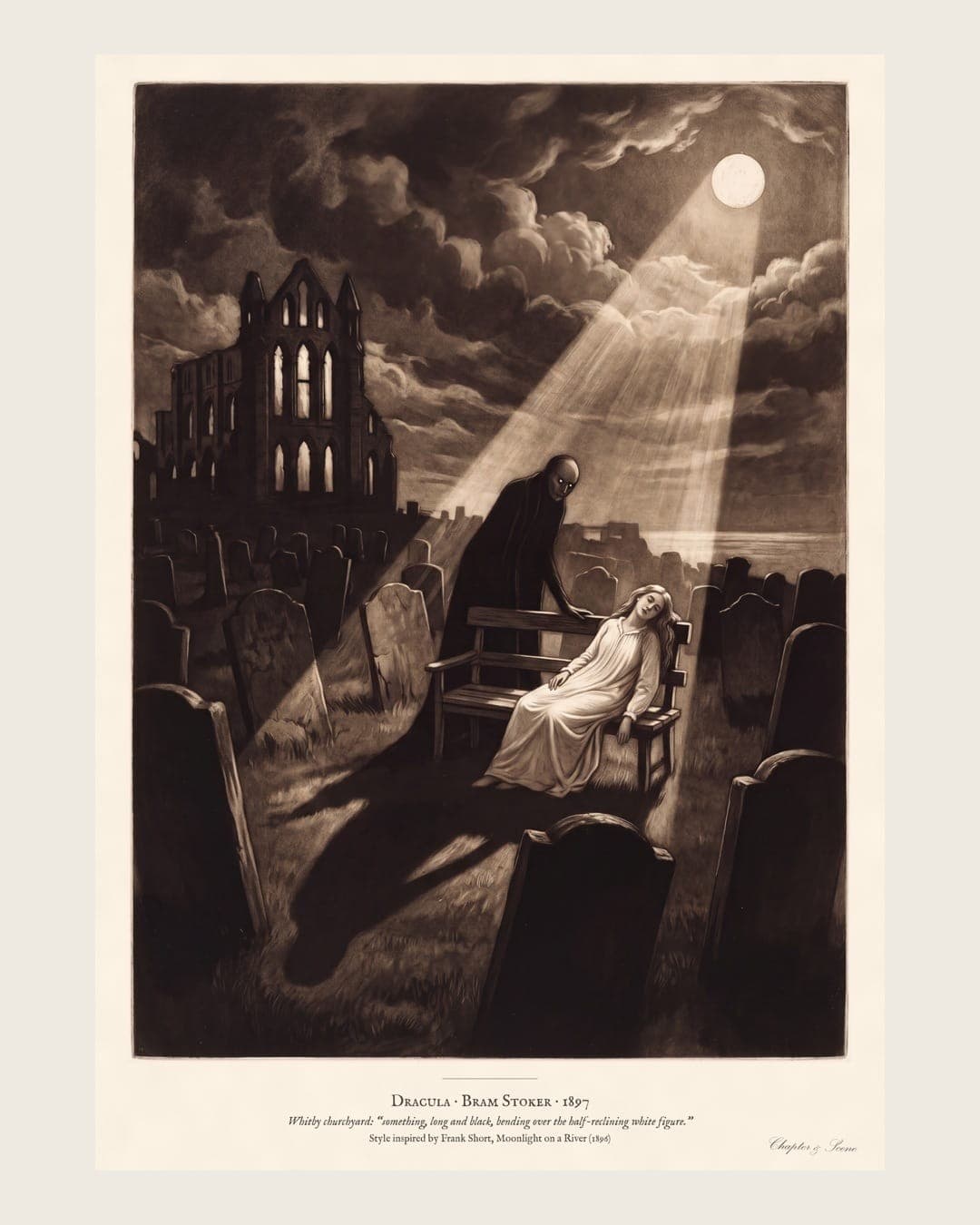
Inspired by Dracula
Something Long and Black
From £19.99
Bram Stoker's Dracula (1897) is a novel of letters, diaries and newspaper cuttings, and its most frightening pages are set not in Transylvania but on the Yorkshire coast. My Dracula prints go to Whitby, where the Count comes ashore and the story stops being a rumour. Each scene is made with AI image tools, then art-directed by me in the style of the old prints Stoker's first readers would have known.
In 1890 Stoker took a holiday in Whitby, and in the town's library he found a book that mentioned a prince called Dracula. He kept the name and he kept the town. In Chapter 8, Mina wakes in the night to find Lucy's bed empty. She runs through the sleeping streets and up the long flight of steps to the East Cliff, where the ruined abbey stands over the churchyard. On their favourite seat, in a shaft of moonlight, Lucy is half reclining, and something long and black is bending over her. Mina calls out, the thing raises its head, and for a moment she sees a white face and red, gleaming eyes. I made that moment as a Victorian mezzotint, the printmaking of Stoker's own years, with every bit of light scraped out of velvet black. The abbey on the skyline is real and still stands above Whitby today.
For the reader who has climbed the 199 steps, the friend who rereads Dracula every October, or anyone with a gothic wall waiting to be filled. Unframed A4 prints start at £19.99, and framed prints arrive ready to hang, with free delivery to the UK and US.