11 gothic novels to read this Halloween
October is the month for the books that creak. Here are the gothic novels I come back to every Halloween: ten classics and one modern book that frightens grown-ups more than children. A few of them have found their way onto my prints, and I'll show you which scenes I chose and why.
What makes a novel gothic?
Gothic novels are stories where the setting does half the frightening: a castle, a moor, an old house with one room nobody goes into. There is usually a secret, often a family one, and a feeling that the past has not finished with the present. The form began with Horace Walpole's The Castle of Otranto in 1764 and has never really gone away.
1. Frankenstein, Mary Shelley (1818)
Mary Shelley began it in the summer of 1816, at a villa by Lake Geneva, when Lord Byron challenged his guests to write a ghost story. She was eighteen. What she wrote is less a monster story than a story about a creature nobody will love. Read it for the moment the creation opens its eyes, "on a dreary night of November", and for the creature's own voice, which is the saddest thing in the book.
2. Wuthering Heights, Emily Brontë (1847)
A love story set on the Yorkshire moors, and the cruellest one you will ever read. It opens with a traveller stranded at the Heights in a snowstorm and a hand at the window in the night. Brontë never tells you whether the ghost is real, which is exactly why it stays with you.
3. Carmilla, Sheridan Le Fanu (1872)
A vampire novella published twenty-five years before Dracula, set in a lonely castle in Styria. A carriage crashes, a beautiful girl is left in the care of the family, and the narrator's nightmares begin. It is short enough to read in one long October evening.
4. Strange Case of Dr Jekyll and Mr Hyde, Robert Louis Stevenson (1886)
Fog, gaslight and a respectable doctor with a locked laboratory. Everybody thinks they know the twist, but the real horror is in Jekyll's own confession, that "man is not truly one, but truly two".
5. The Picture of Dorian Gray, Oscar Wilde (1890)
A beautiful young man stays young while his portrait, hidden in a locked room, grows old and cruel for him. Witty on every page, and darker on every page too.
6. Dracula, Bram Stoker (1897)
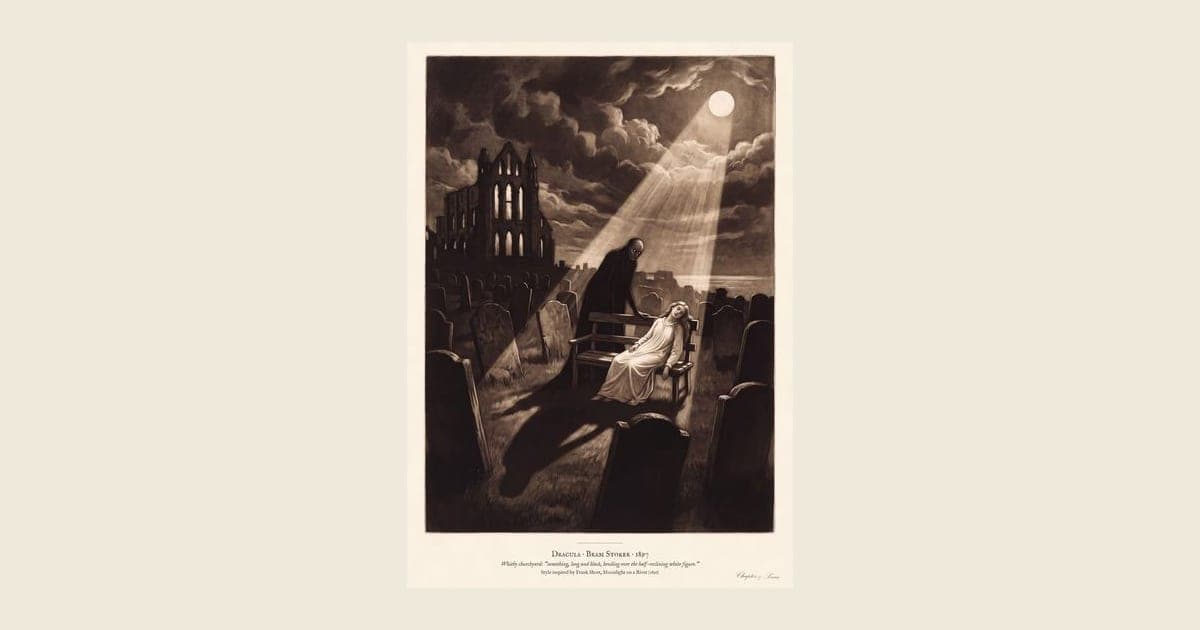
The one everybody thinks they know, and almost nobody has read. It is told through diaries, letters and newspaper cuttings, which makes it feel like evidence. The Count's welcome at the castle door, "Welcome to my house! Enter freely and of your own will!", is still one of the most frightening invitations in fiction. The best pages are set in Whitby, on the Yorkshire coast, and my Dracula print is from there: Lucy on the churchyard seat by moonlight, and something long and black bending over her.
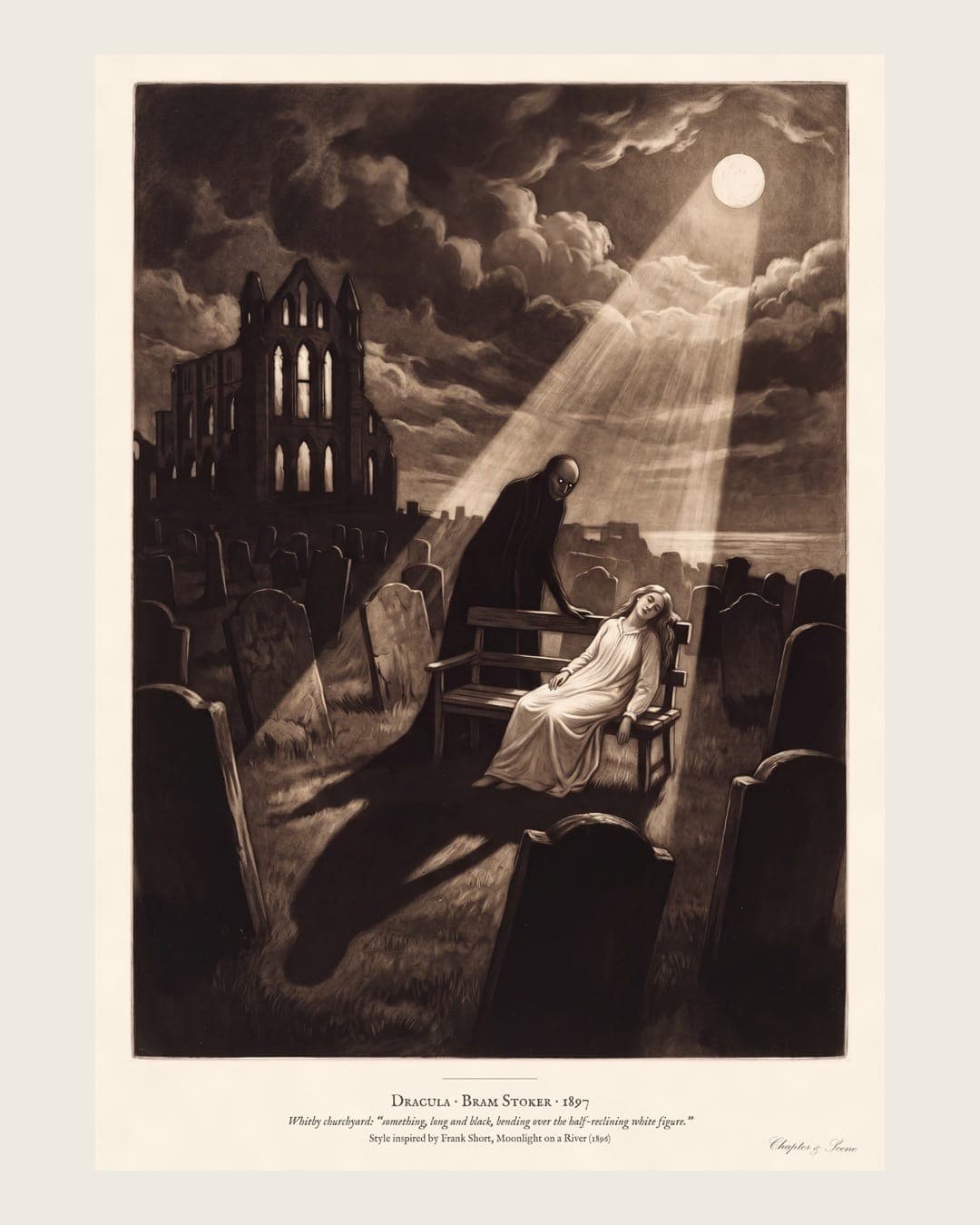
If you want to know how much of Whitby is real, I wrote about it here: Dracula in Whitby: the real places behind the novel.
7. The Turn of the Screw, Henry James (1898)
A young governess, a lonely country house called Bly, two children who are a little too good, and figures that appear where they should not be. James leaves you to decide whether the ghosts are real or the governess is not well, and readers have been arguing about it ever since.
8. The Hound of the Baskervilles, Arthur Conan Doyle (1902)
Sherlock Holmes on Dartmoor, a family curse and a legend that might be true. Holmes is away for much of the book, which leaves Watson alone on the moor at night, and the book is all the better for it. My print is the moment the hound comes out of the fog.
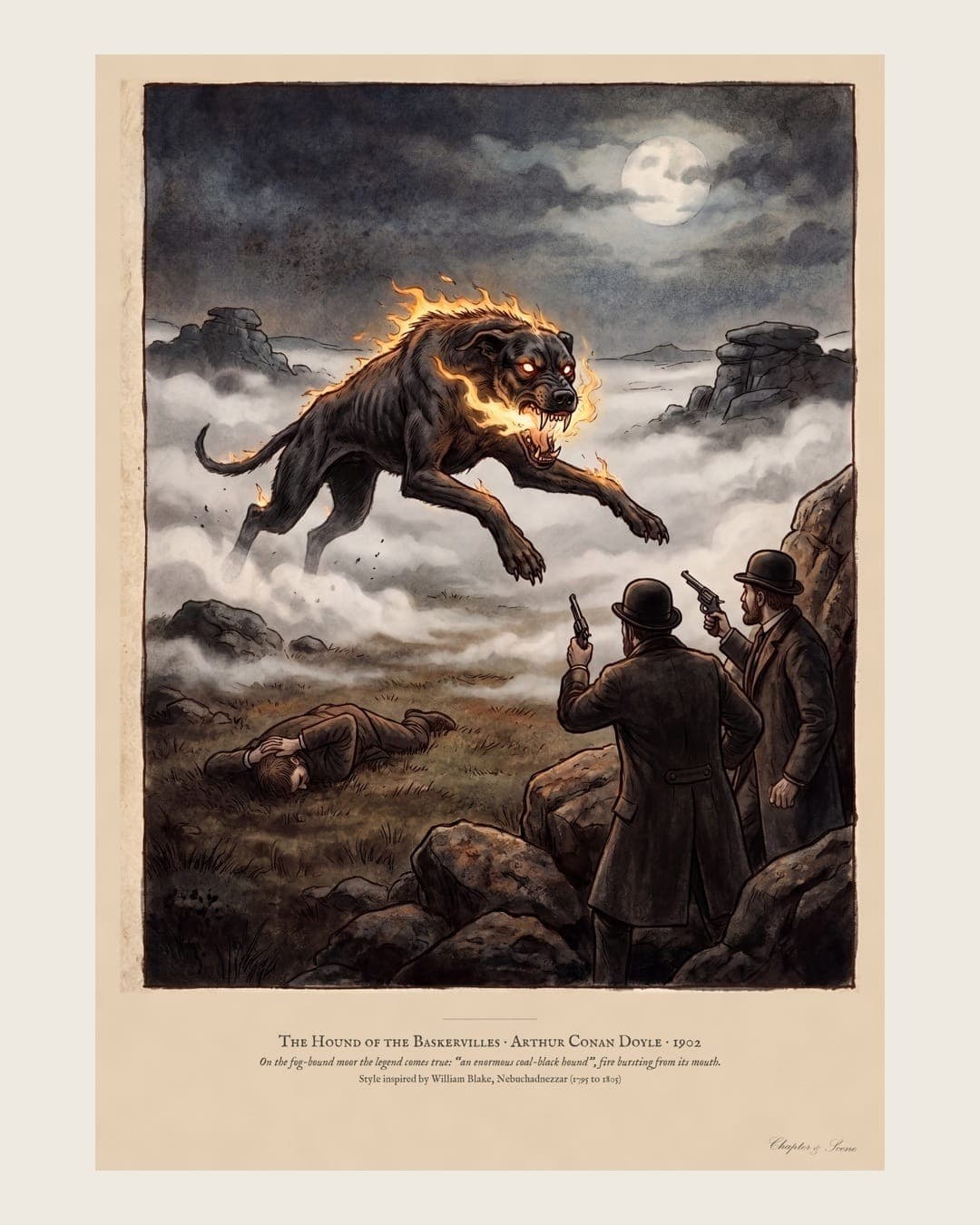
The legends that gave Doyle the idea are just as good: Black Shuck and the real hounds behind the story.
9. Rebecca, Daphne du Maurier (1938)
A shy young bride, a great house on the Cornish coast, and a first wife who is dead but somehow still in charge. It has one of the most famous opening lines in English fiction, and a housekeeper you will not forget.
10. The Haunting of Hill House, Shirley Jackson (1959)
Four people spend a summer in a house with a terrible reputation, to see if it is haunted. Jackson barely shows you anything, and that is the trick: the fear is all in the gaps.
11. Coraline, Neil Gaiman (2002)
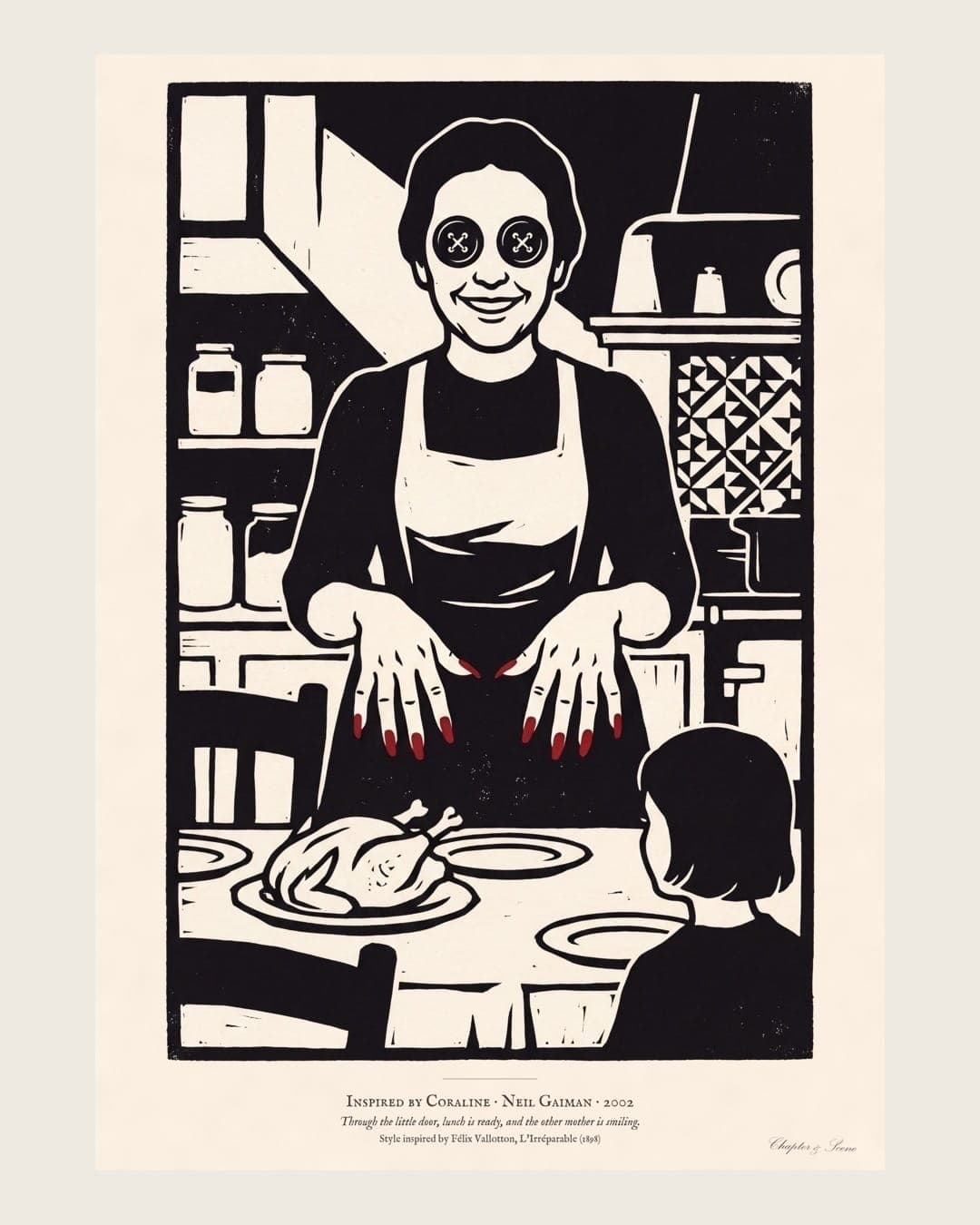
The modern one. A girl finds a little door in her new flat, and on the other side is a mother who is almost her own, except for the black buttons where her eyes should be. It is a children's book, and it frightens adults more. My print is the moment the Other Mother welcomes Coraline to lunch.
Where to start
If you only read one this October, make it Dracula: it is longer than you expect and better than you remember. If you have a single evening, read Carmilla or The Turn of the Screw. And if you want something to read aloud with older children, Coraline is perfect.
A note on the prints: I make every scene with AI image tools, then art-direct and refine it in the style of a print from the book's own time. You can see them all in the Gothic and Horror collection.